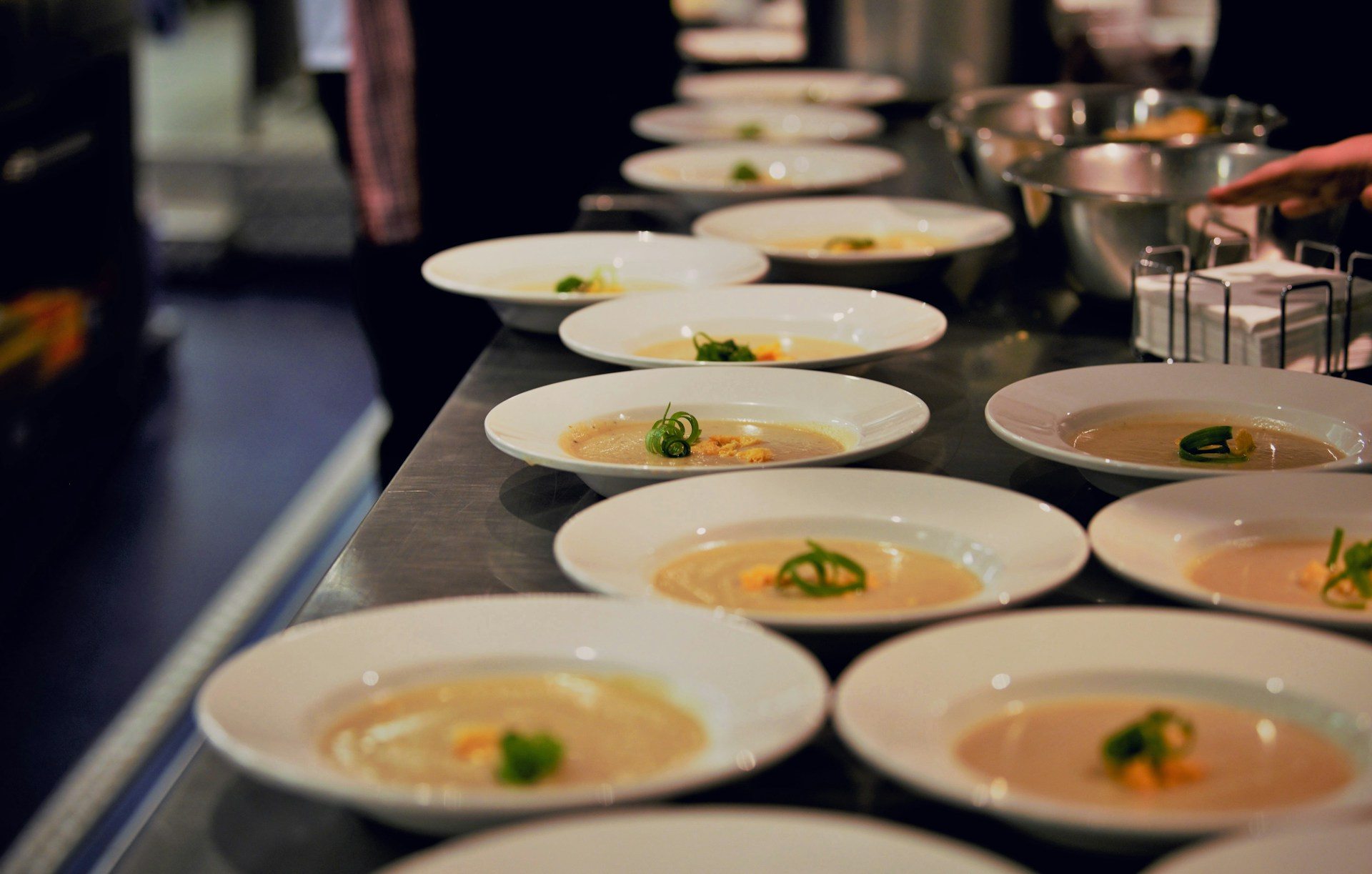
Best way to keep soup warm at large events
02/09/2025
Soup is a popular and practical choice for large-scale events. It’s easy to portion, appeals to a wide range of guests and works well across corporate functions, open days, winter markets and more. The challenge isn’t the cooking, it’s keeping the soup hot, safe and consistent throughout service. These are the best methods of keeping soup at its best when catering for a large event.
1. Soup Kettles
Best for: Self-serve counters, indoor pop-ups, universities, hospitality settings
Soup kettles are one of the most popular hot-hold solutions for caterers. They’re plug-and-play, compact and simple to use. Once your soup is heated to the required temperature (at least 75°C), you can transfer it to the kettle and let it maintain a safe holding temperature above 63°C throughout service.
Pros:
- Easy to set up and use
- Compact and transportable
- Keeps soup visible and accessible for guests
- Often includes a built-in ladle holder
Cons:
- Not ideal for large batch reheating
- Requires regular stirring to maintain consistency
- Not always suitable for outdoor events without reliable power
Cleaning tips:
Remove the insert and wash it with warm, soapy water. Wipe down the outer casing and dry thoroughly before storage. Avoid submerging electrical parts.
2. Bain-Maries
Best for: Buffets, staff canteens, plated service stations
Bain-maries use hot water to gently hold food at a steady temperature. They’re a good choice if you’re running a longer service window or offering plated meals where soup is one of several options.
Pros:
- Excellent temperature control
- Keeps soup from drying out
- Can hold multiple soups at once in separate inserts
Cons:
- Slower to set up and heat compared to kettles
- Takes up more counter space
- Needs refilling with water during extended use
Cleaning tips:
Drain the water bath fully and clean the basin and inserts with warm water and food-safe sanitiser. Dry all parts thoroughly before storage.
3. Thermal Soup Dispensers
Best for: Outdoor catering, mobile setups, community events
Thermal dispensers or insulated soup carriers are ideal when access to power is limited. These vacuum-insulated containers keep soup warm for several hours without a heat source, making them useful for mobile or temporary setups.
Pros:
- No electricity needed
- Great for transport and off-site service
- Keeps soup sealed and protected
Cons:
- Limited holding time (usually 4–6 hours)
- Not suitable for reheating
- Harder to monitor internal temperature
Cleaning tips:
Rinse with hot water immediately after service. Use a bottle brush or long-handled sponge to clean the interior. Air-dry completely with the lid off to prevent smells.
4. Chafing Dishes
Best for: Weddings, formal functions, small-scale indoor events
Chafing dishes use gel fuel cans to keep food warm beneath metal pans. They’re popular for formal events thanks to their presentation value but work best in low-traffic environments where staff are on hand to monitor temperature and refill as needed.
Pros:
- Presentable and traditional look
- Doesn’t require electricity
- Ideal for table or buffet service
Cons:
- Open flame requires care and attention
- Limited temperature control
- Not ideal for thick soups that may stick or scorch
Cleaning tips:
Dispose of used fuel cans safely. Clean pans and lids as you would with any stainless-steel cookware. Wipe down frames and drip trays.
General tips for keeping soup hot and safe
- Always heat soup to at least 82°C before transferring to hot-hold units
- Use a food thermometer to check holding temperatures stay above 63°C
- Stir soups regularly to prevent sticking and ensure even consistency
- Use measured ladles to keep portions consistent and service flowing
- Label soups clearly with flavour, allergens and dietary notes
- Keep lids closed when not serving to retain heat and avoid contamination
If you’d like to speak to someone about catering for your upcoming event or request a soup sample, we’re here to help. Get in touch with our team and we’ll help you find the right soups for your service.
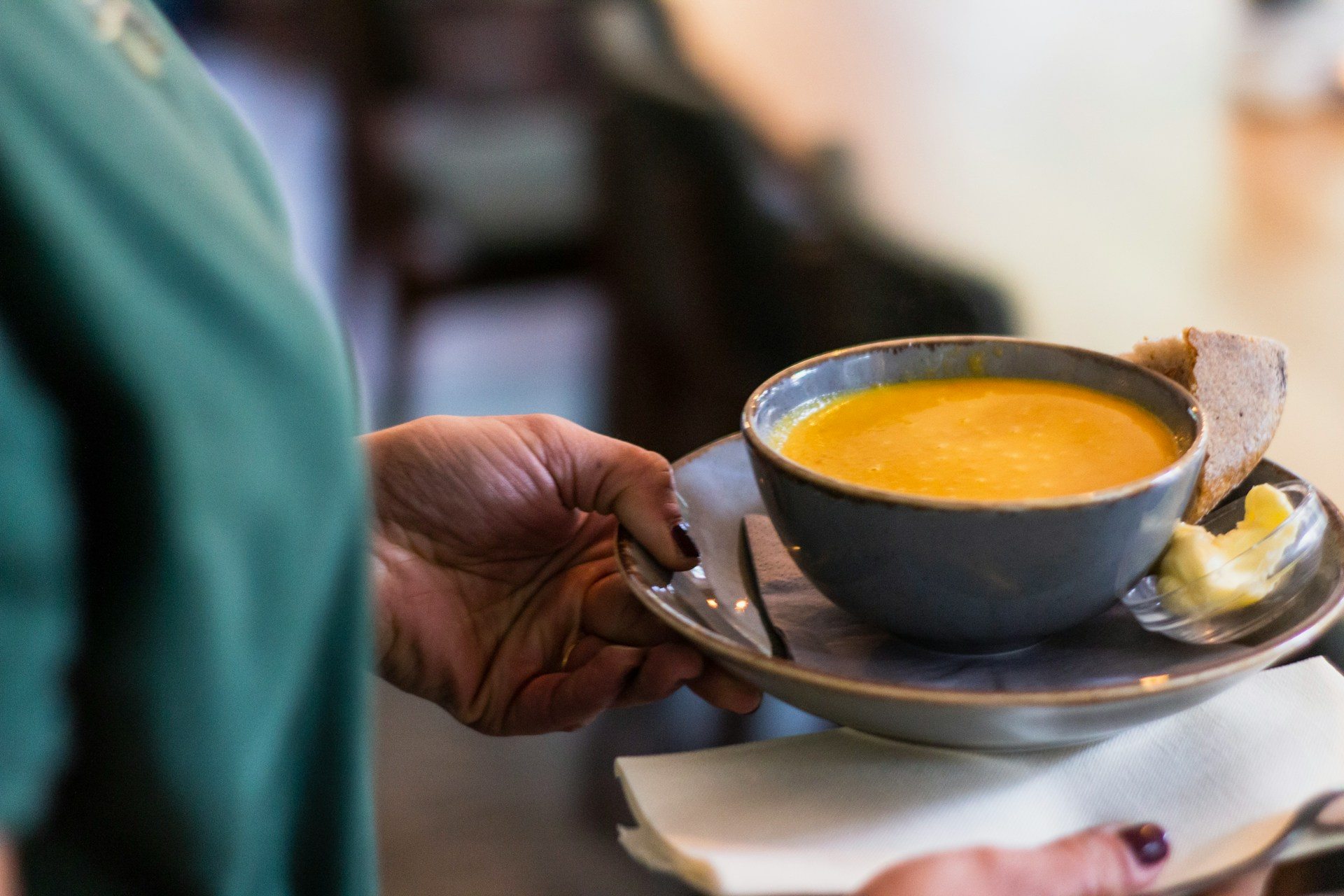
How Hospital Soups Support Different Patient Diets and Clinical Needs
Soup can play a vital role in hospital catering because it can be adapted to meet a wide range of patient needs while remaining easy to serve at scale...
Read more
Incorporating Soup into a Healthy Food Truck Menu
Soup is one of the easiest ways to make a healthy food truck menu feel more complete, without slowing service down or complicating prep. Done well, it...
Read more


